Training offer

The High Commission for Migrations (ACM.P.I.) makes available several resources and training offer to citizens, professionals and entities that, directly or indirectly, are linked to the questions of Intercultural and Migrations. These training materials were created in the scope of the ACM, P.I. mission, which is based upon the promotion of a positive and enriching management of the cultural diversity, through intercultural and inter religious dialogue, based on the respect of the Constitution and legislation in place, giving value to the cultural diversity in a frame of mutual development and respect.
The Training of ACM, P.I., does, all over the country, actions of information/ awareness and seminars with the following goals:
Sensitization to the hosting and integration of immigrants in Portugal;  
Training for interculturality.
 
The interested entities that work, directly or indirectly, in the hostage and integration of immigrants and their descendants may do their request by filling the application form available here

Performing Conditions
The performance of actions does not imply any costs to the applicant entities.  
The applicant entity must:
  • Gather at least 20 and a maximum of 35 participants in each action
  • Ensure a place to perform the action – room with table and chairs displayed in a U
  • Have support equipments – flipchart and markers, computer with access to the internet and a data show.
 
Available Training Actions
To host and Celebrate: Support Services and Small Ideas
Presenting to the ACM, I.P, as well as the respective available services, in view of a better support to the hostage and integration of immigrants. Suggestion that make the difference in the performance of diversity and promotion of tolerance.

Intercultural Dialogue
Exercise of comprehension of the cultural diversity and of the relation with other in the current world.

Inter Religious Dialogue
Proposal of meditation about the importance of religions and believes in a plural society and world in view of a better comprehension of the relevance of the religious dimension in the process of identity construction and as an expression of culture. Discussion of the concept as an interculturality dimension,
 
To get to know the festive dates and events access to calendar of events.
 
Myths and facts about immigration in Portugal
proposal of reflection and debate over “myths and facts” about immigrants in Portugal, based on the scientific knowledge acquired.

Nationality Law
Presentation and legal frame to obtain Portuguese nationality (action to technicians)

Immigration Law
Presentation of the conditions and entrance procedures, permanence, exit and retirement of foreigners of the national territory according to the Immigration Law (action to technicians)

Learn with histories: first steps to interculturality
Reflection to the educative agents about the pedagogic work and use of histories to the childhood, in accordance to an intercultural approach. You may take part of a session of reading and performance of activities with a group of children.

Intercultural Education to youths
Exercise of comprehension of the cultural diversity and of intercultural relationships. Discussion of the concept as a dimension f participation and democratic citizenship.
 
Intercultural Education
proposal of a deep reflection about the intercultural apprenticeship as a changing process of the practices.

Intercultural Education in school
Proposal of reflection about the way that the intercultural apprenticeship, as a changing process of practices, may be developed in a school context.

Health, Immigration and Diversity
Legal framing of the access to health by foreigner citizens in Portugal and identification of the main barriers. Reflection about the challenges of the interculturality in this context.

Portuguese Gipsies, Citizenship and Interculturality
Reflection about the concepts of citizenship and interculturality in accordance to the cultural diversity present in Portugal. Proposal of analysis and comprehension of the processes of inclusion and exclusion of Portuguese gipsies, throughout the years, and sharing good practices and tips to intervene more equitable and social cohesion.

Municipals Plans for the Integration of Immigrants

The Municipals Plans for the Integration of Immigrants are documents that contain the strategies of joint performance of different entities that act in the area of migration, at a local level, and that apply to conclude the multi vector process of immigrants in the Portuguese society.
Acknowledgement  that the integration is made at a local level and that the Common Agenda for the Integration of Nationals of Third Countries (COM (2011) 455 final) recommends that the member states promote more policies of integration at a local lever, improve the cooperation between different levels of governance (national, regional and local) and promote the monitoring of services and polices developed in these different levels, since 2014, to build Municipals Plan for the Integration of Immigrants as a fundamental strategy to a more adequate management of the migratory flow and contribute to the local development.
 
 
Approach bottom-up
Approaches bottom-up, as a basis of a strategy that mean a joint performance of the different entities, public and from the civil society, that act in the area of hosting and integration of immigrants at a local level, namely, the immigrants associations, granting the participation of all citizens – immigrants and hosting societies through meetings, information session, forums, public consultation, survey, etc.  
 
Local Diagnose
Local diagnose that identifies the entities that intervene in a certain municipality and respective areas of performance and rendered services as well as the needs of the immigrant communities that live there, from which must be drawn responses integrated and efficient with regards to the hosting and integration of immigrants and diversity enrichment.
 
Plan Structure
Plan Structure based on the definition of the following contents:
  • Competences and responsibilities of each entity involved;  
  • Measures, goals, indicators, target and chronogram considering the period of 2015-2017;

Areas: Services of Hosting and Integration/ Urbanism and Housing/ Work market and Entrepreneurship/ Education and Language/ Capability and Training / Culture / Health / Solidarity and Social Response / Citizenship and Civic Participation / Media and Sensitization of the Public Opinion / Racism and Discrimination / International Relationships / Religion;

Measures by level:

  • Measures of Level 1 – those that, in the elaboration of the Plan, are considered by the entities as the hard core for the competences of each council in the area of hosting and integration of immigrants because they are crucial to the process of integration at a local level and that, because of that, must always be granted to immigrant citizens, with our without external financing;
  • Measures of Level  2 – all those that are not a priority on the level 1;
  • Ranking of the Measures at a financing level (shouldn´t be considered the measures that do not need financing to be accomplished).  
  • Mechanisms and instruments of monitoring and future evaluation of the measures in order to contribute to grant the sustainability of the public policies with regards to hosting and integration.
 
Platform of follow-up and monitoring
Platform of follow-up and monitoring representing all citizen of the council (immigrants and hosting societies) that already exist or to create, coordinated by political decision-makers.
 
Access here the set of necessary tools to conceive a PMII. Toolkit
 
Implementing map based on the page of contacts and universities?

Família do Lado - Edição 2015

Imagem em Destaque
Sabia que em Portugal existem mais de 170 nacionalidades e se falam mais de 100 línguas? Certamente que nas ruas da sua cidade/região existem muitas pessoas de diferentes origens. Já alguma vez pensou porque vieram para o nosso país e quais as suas impressões e experiências aqui vividas? Ou talvez seja imigrante e gostaria de ter a oportunidade de conhecer melhor a cultura portuguesa e fazer novas amizades, capazes de fortalecer o seu processo de integração em Portugal!
O que é a iniciativa "Família do Lado"?
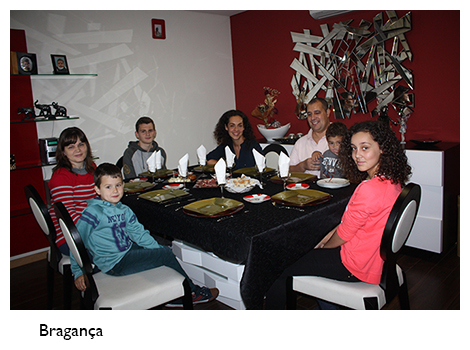
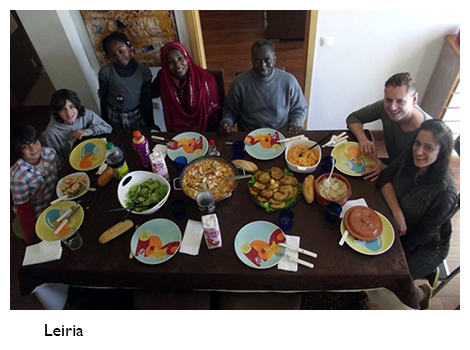
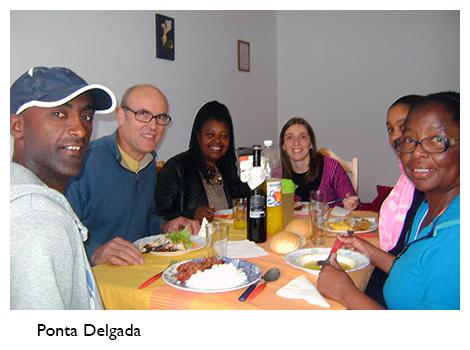
O projeto “Família do Lado” é uma iniciativa através da qual uma família aceita acolher em sua casa uma família que não conheça, constituindo-se pares de famílias - uma imigrante e outra autóctone (ou vice versa) - para a realização de um almoço-convívio, típico da sua cultura, como forma de acolhimento do “Outro”.
Trata-se de uma iniciativa que visa contribuir para uma integração mais efetiva dos imigrantes em Portugal, reforçando as relações sociais e promovendo a diversidade cultural existente no nosso país.
O projeto transnacional foi criado na República Checa em 2004 e assenta no conceito de “Bairros Inclusivos”.
Todos os encontros terão lugar no domingo 22 de novembro de 2015, às 13h, em todo o território nacional, Espanha, República Checa e Cabo Verde.
 
Em Portugal, a iniciativa é dinamizada pelo Alto Comissariado para as Migrações, em parceira com entidades públicas e privadas de todo o país. Se é uma entidade local e quer dinamizar a iniciativa no seu concelho, envie-nos a ficha de inscrição para familiadolado@acm.gov.pt
 
A iniciativa Família do Lado ocorre em Portugal todos os anos, desde 2012. Têm sido muitas as entidades públicas (Autarquias e Juntas de Freguesia) e privadas  (Associações de Imigrantes; Associações Juvenis e outras, Cooperativas, ONG, IPSS e Empresas) que todos os anos se inscrevem para a sua implementação a nível local. Para tal foi definida uma metodologia de apoio que integra 10 passos, para a sua implementação bem sucedida. A metodologia faz parte de uma brochura que inclui todas as ferramentas:
 
Poderão participar nesta atividade, famílias imigrantes e famílias autóctones que desejem contribuir para o processo de integração dos imigrantes residentes em Portugal.
Famílias
Para participar as famílias deverão contactar a entidade organizadora mais próxima da sua área de residência (autarquias, entidades da sociedade civil ou outra), consultando a lista aqui, onde poderão obter mais informações e inscrever-se na qualidade de Família Anfitriã ou de Família Visitante.
Para se inscrever poderá ainda fazer o download da ficha de inscrição e enviar por correio eletrónico para a entidade mais perto do seu local de residência.
 
Assistentes
Se não pode inscrever-se enquanto família, nomeadamente por trabalhar na área da imigração e já estar sensibilizado para estas questões, poderá inscrever-se enquanto Assistente – elemento crucial no acompanhamento de cada par de famílias, desde a inscrição até ao dia do encontro, fazendo parte do almoço.
Para tal basta inscrever-se junto da entidade organizadora da iniciativa no seu concelho, deslocando-se pessoalmente ou através do envio da ficha de inscrição por correio.
 
Desde 2012 que a iniciativa Família do Lado tem vindo a atrair o interesse dos meios de comunicação social que, desse modo, se têm associado ao projeto dando destaque à convivência e às relações entre comunidades imigrantes e sociedade autóctone de uma forma positiva e muito abrangente. Isso mesmo tem possível constatar em todas as edições, com o impacto mediático que a Família do Lado alcançou em Portugal:
Documentário internacional: https://youtu.be/f_C2e8gbRcc
 
Nas 3 edições anteriores foram realizados 242 encontros, onde estiveram presentes:
- 559 Famílias - 309 famílias imigrantes e 250 famílias autóctones
- 1.717 Participantes e 232 voluntários
Participantes de 50 países diferentes: Alemanha, Angola, Bangladesh, Bélgica, Bielorrússia, Brasil, Bulgária, Cabo Verde, Camarões, Canadá, China, Colômbia, Costa do Marfim, Cuba, Dinamarca, Egipto, Espanha, E.U.A., Guatemala, Guiné-Bissau, Guiné – Conacri, Hungria, Índia, Inglaterra, Irão, Itália, Letónia, Líbia, Lituânia, Mali, Marrocos, México, Moçambique, Moldávia, Noruega, Paquistão, Polónia, Portugal, R.D. Congo, Roménia, Rússia, S. Tomé e Príncipe, Senegal, Síria, Taiwan, Tanzânia, Timor Leste, Turquia, Ucrânia e Venezuela.

Em 55 concelhos, de norte a sul do país e regiões autónomas: Aguiar da Beira, Alcanena, Almada, Amadora, Angra do Heroísmo, Aveiro, Barreiro, Batalha, Braga, Bragança, Caldas da Rainha, Cascais, Chaves, Coimbra, Coruche, Entroncamento, Estremoz, Évora, Faro, Fundão, Guarda, Lagoa, Leiria, Lisboa, Loulé, Loures, Lourinhã, Lousã, Maia, Marinha Grande, Miranda do Corvo, Moita, Moura, Odemira, Odivelas, Oeiras, Olhão, Oliveira de Azeméis, Ponta Delgada, Portalegre, Portimão, Porto, Póvoa de Varzim, Salvaterra de Magos, Santarém, Seixal, Serpa, Sintra, Torres Vedras, Trofa, Viana do Castelo, Vila Franca de Xira, Vila Nova de Gaia, Vila Verde e Viseu.   

Esta é uma iniciativa transnacional que todos os anos decorre noutros países da Europa e, Portugal tem sido um dos países com maior número de encontros e famílias participantes.

  As imagens que integram esta galeria são fruto da recolha por parte dos inúmeros Assistentes (voluntários/as) que todos os anos se associam à iniciativa.  

How may I undertake a Portuguese language course for foreigners?

If you wish to undertake a Portuguese language course for foreigner you may contact the Migrant Support Line (808 257 257) to know which school or job center and professional training are closer to your area of residence or work.
The Program PPT – Portuguese for All – is an initiative that aims to develop portuguese language courses for foreigners and that certify the levels  A2 – Elementary User; B2 – Independent User; and technical portuguese targeted to the immigrant population
 
The courses are developed by schools from the public network and by the jog centres and professional training from the Institute of Employment and Professional Training (IEFP).
 
The citizens/ residents in Portugal, i.e., nationals from third countries, communitarians, refugees or asylum, luso-descendants, when such is justified.
 
 
The mastery of the Portuguese language not only allows the communication with others and a better interaction with the hosting society but is also crucial to integrate fully the Portuguese society, including the work market. It is even essential to submit a request of nationality, permanent residence permit and the status of long term resident.
 
 
Courses Length
 
 
The length of the course is 150 hours. The time to conclude each course of Portuguese language depends from the organization of each school or job centre and training, and may run for up to 9 months, according to the number of hours of training taught per week.
 
 
The length of the course is 150 hours. The time to conclude each course of Portuguese language for foreigners depends from the organization of each school or job center and training, and may run for up to 9 months, according to the number of hours of training taught per week.
Technical Portuguese
 
Specializes courses in areas such as Retail, Hospitality, Beauty Care, Civil Construction and Civil Engineering aiming to ease up the integrate the immigrant in the work market.
 
The length of the course is 25 hours. The time to conclude each course of portuguese language depend from the organization of each school or job centre and training, and may run for up to 9 months, according to the number of hours of training taught per week.
 
 
The registration in a Portuguese language course must be made in the Schools (public network), in the Job Centres and Professional Training of the IEFP or other places indicated, namely, the National Centre for the Support of the Immigrant (CNAI).
 
There are no requisites of access with regards to the gender, age, school qualifications, situation according to job or nationality, however, the regular situation of the student in Portugal must be covered through a valid title of residence (in certain cases it might be needed the ID Card, if denizen).
 
At the schools of the public network the minimum age is 15 years old, but in the job centres and professional training is 18 years old.
 
 
The schools of the public network and the Job Centers and Professional Training inform that the following documents are needed:  
 
•   Application Form;
•   ID/ Citizen Card (citizen from the UE);
•   Registration in the City Council of the area of residence (UE);
•   Valid title of residence in Portugal or prove that the procedure to obtained it has started, renewed or extension with SEF – Foreigners and Border Services (immigrant citizens);
•   Tax Number;
•   NIB – Bank Identifier Code (if applicable).


The courses are organized by the following UFCD – Units of Short Term Training:
 

UFCD of Portuguese to speakers of other languages – Elementary User – Level A1:

  • UFCD 6452 – Me and my daily routine (25 horas)
  • UFCD 6453 – Eating habits, cultures and leisure (25 horas)
  • UFCD 6454 – The human body, health and services (25 horas)
 
UFCD of Portuguese to speakers of other languages – Elementary User – Level A2:
 
  • UFCD 6455 – Me and the work market (25 horas)
  • UFCD 6456 – My past and my present (25 horas)
  • UFCD 6457 – Communication and life in society (25 horas)


UFCD of Portuguese to speakers of other languages – Independent User – Level B1:
 
See UFCD 6397UI – Me, the society and culture (50 Horas)
See UFCD 6398UI – Me and the others (25 Horas)
See UFCD 6399UI – Cultural Timeliness (25 Horas) - opcional
 
UFCD of Portuguese to speakers of other languages Independent User – Level B2
 
  • See UFCD 6400UI – Society and life projects (50 Horas)
  • See UFCD 6401UI – Timeliness (25 Horas).
 
 
No, if you obtained a certificate of level A2 – Elementary User or superior you are dismissed from doing the Portuguese Language Exam.


The knowledge of the Portuguese language can also be proved by the following ways:


  • Qualifications Certificate issued by a public, private or cooperative entity recognized in the legal terms considering that its holder has undertook with success the portuguese unit/ subject at least in two academic years;
  • Certificate of approval of portuguese language taken in entities of the public network when done at the national territory or places approved by  Camões – Institute of Cooperation and Language, I.P., when done abroad, and the regulation of the exam as well as its respective control must be part of the decree of the member of the Govern responsible for the areas of foreigner business and internal administration, justice and education;  
  • Certificate both in portuguese and foreign language, issued upon accomplishment of the exam of the portuguese exam center, as a foreign language, recognized by the Ministry of Education and Science, according to the protocol;
  • Certificate of qualification that prove the completion of the level A2 or higher, issued by a facility of the public education, job centers and training and protocol center of the  IEFP I.P., under the Decree nr.  1262/2009, of 15th of October, changed by the Decree nr. 216-B/2012, of 18th July.
 
 
It is an exam that allows obtaining the Initial Certificate of Portuguese Foreign Language and gives the certification of Level A2 – Elementary User - From the European Framework of Reference for languages from the European Council.  Europeu Comum de Referência para as Línguas, do Conselho da Europa.
 

Where may I do the CIPLE exam?  

 
The exam CIPLE may be done in exam centres recognized by the Ministry of Education and Science or other places approved by Camões – Institute of Cooperation and Language, I.P., namely:
  • Faculty of Arts of the Porto University of Beira Interior;
  • Faculty of Arts of the University de Lisbon;
  • Faculty of Social and Human Sciences of the University  Nova of Lisbon;
  • Polytechnic Institute of Setúbal;
  • University of Algarve,
  • Others, consult the list at: http://caple.letras.ulisboa.pt/centers/index


Yes.
 
Yes.
 
Yes.
 
Yes.
 
Yes.
 
Yes.

Intercultural Kit

The Intercultural Kit aims to make available to schools, and other professionals of the education sector, a set of materials around the subject interculturality, that were conceived and released by the Office Inter Cultures and by the High Commission for the Migrations P.I. (ACM), in strict cooperation with other partners.
This compilation represents a contribute for the reflection around inherent challenges to a world unequivocally more global, as a result of migrations and increasing mobility, but also to a global communication, challenging our believes and perception of diversity as well as our competences to interact with others,
All these challenges are placed, currently, to the society in general, and to the school in particular, considering its important role as a space of social interactions and personal training and social education of children, youths and adults.
 
The materials here exposed aim to meditate about the way that professionals and their perception and values, the curricula and taught contents, as well as pedagogic methods, the public policies and the culture of “educative spaces” give response, positively, to the current challenges presented. To promote the permanent questioning, the decentralization and critical balance of the practice are other key goals of these materials.
 
Also considering the role of ACM, P.I. In February, the DGAI through SIGRE, shall issue the registration books in electronic form to allow your print by recenseadoras committees for consultation and complaints from stakeholders during the month of March (Public Institute in which the Office Inter Cultures was integrated – created in 1991 by the Ministry of (Law-Decree nr. 167/2007, of 3rd May), the present KIT also aims to promote the further development of the prerequisites and approaches around the subject.  


Local Policies to hosting and integrating the immigrants - Because it is at a local level that the integration is made!

Portugal has registered, over the last years, a positive evolution in the scope of polices both pratices of hosting and integration of immingrat, to which the State intervantions have contribute, the organizations of the civil societhy and the immingrante comunities themselves Because it is at a local level that the integration is made! However, assuming that the search of superior levels of integration must be permanent and that a qualitative and efficient jump on the policies of hosting and integrating the immigrants it is only possible through a joint work and duly articulated between the different actors, it is crucial to create strategies that grant an join performance of the different entities that act in this area not only at a national level (for example, the National Plans for the Integration of Immigrants 2007-2009 and 2010-2013 and, more recently, the Strategic Plan for Migration), as well as at a local level.
Because the integration is a bidirectional process and the diversity is a factor of local development in that sense some set of plans and tools have been made available to the local policies of integration:
 
  • Municipal Plans for the Integration of Immigrants
  • Documents containing the strategies of joint performance of the different entities that act in the area of migrations, at a local level, and that work for the completion of the multi vector process of immigrants in the Portuguese society.
 
Tools of support to the characterization and monitoring of the local policies of hosting and integration of immigrants.
 
A pioneer network regarding the conception, implementation and evaluation of structural and sustainable local policies, bases on municipals plans transversal to the process of hosting and integration the immigrants at a local level, based upon a real diagnose of their needs.


Municipal Plans to the Integration of Immigrants Index of Municipals Friends of Immigrants and of Diversity

The index of Municipals Friends of Immigrants and of Diversity (IMAD) is a tool to support the characterization and monitoring of local policies of hosting and integration of immigrants.
Inspired in the work taken by the Council of Europe, the IMAD is a query, by questionnaire, that covers all areas transversal to the multi vector process of integration of immigrants in the Portuguese society
 
  • Services of Integration  
  • Solidaridarity and Social Response
  • Urbanism and Housing
  • Citizenship and Civic Participation
  • Work Market and Enterpreunership
  • Media and Sensitization of the Public Opinion
  • Education and Language
  • Training and Capability
  • Racism and Descrimination
  • Culture
  • International Relationships
  • Health
  • Religion
 
Taking into consideration the possibility of continuous use, improving and deepening of local polices, the IMAD aims to understand accurately:
  • The universe of the relevant local policies in this area;
  • The effectiveness of these policies in terms of response to the needs
  • The identification of Inspiring Practices with potential to be applied.
 
 
How to apply
Considering the diagnose of policies of hosting and integration to build sustainable Municipals Plans to be fundamental, the IMAD is a starting point to build the Municipals Plans:
Questionnaire and respective User Manual here:
 
 
At a first stage financed by the Operational Program of Technical Assistance FSE (POAT), the IMAD was applied to a universe of 39 municipals, involving 125 entities among them City Councils, School Groups and entities from the Civil Society
 
It follows, besides the municipal Reports, a set of Inspiring Practices, which you may access here.
 
 
The application of the IMAD already made in 39 municipals, involving 125 entities among them City Councils, School Groups and entities from the Civil Society, gave origin, besides the Reports by municipals, a set of Inspiring Practices, which you may access here:
 
To share your Practice, fill in the Application Form of Characterization of Inspiring Practices here.


Network of Municipals Friends of Immigrants and Diversity

The RMAD is a pioneer network regarding the conception, implementation and evaluation of structural and sustainable local policies based upon municipal plans transversal to the process of hosting and integration of immigrants at a local level, based on the real diagnose of their needs.

Created by the recommendations from the Common Agenda for the Integration of NPT (more information), with respects to:

  • Valuing policies of integration at a local level;  
  • Improvement of the cooperation between the different levels of governance: national, regional and local
  • Promotion of monitoring of services and policies developed at different levels

Integrant Municipals

The RMAD integrats around a hundred of munipals from the north to the south of the coutrry and the autonomous regions, most of which have already applied the IMAD and some are envolved in Municipals Plans. See the list here.

Join

To join the Network fill in the Application Form of Adherence here and send it to ACM (Rua dos Anjos, nº66, 1º 1150-039 Lisbon).


Project of Intercultural Mediation in Public Services – MISP

The Project of Intercultural Mediation in Public Services (MISP) consists in an intercultural mediation of a communitarian focus, based on three principles that are crosses among them and fed continuously: the principle of mediation, the principle of interculturality and the principle of communitarian intervention. It is a project developed by City Councils in partnership with entities of the Civil Society, namely, immigrant associations.
In this model of intervention to highlight the role of the autarchies as privileged structures to promote, locally, the social cohesion and the intercultural conviviality, taking on also the role of a close management of social cultural diversity, namely, with the mobilization and participation of all local protagonists, public and private, organizations and individuals.
The implementation of MISO has been ensured by the co-financing of the European Fun to the Integration of Nationals in Third Countries (FEINPT), takin on the ACM, I.P. the status of a delegate structure. 
The main goal of the Project of Intercultural Mediation in Public Services (MISP) is that of contribute to the social cohesion, improving the life quality and intercultural citizen conviviality in municipals with a significant cultural diversity, by doing a positive and preventive management of that same diversity, throughout the mediating intervention and the participations of local protagonists.
 
And more specifically:
1. Ease up the relation and communication between the different protagonists of the community (institutions, professionals and citizens).
2. Increase the participation of the protagonists to strengthen and develop the community.  
3. Adequacy of the institutions and services to the characteristics of the community and its needs.  
4. Promote the prevention and regulation of obvious and latent conflicts of the local community.  
 
The MISP is structured in lines of global actions, specific and transversal.
 
Support to professionals and Institutions – Clarification about several matters: relevant cultural codes; linguistic translation; immigration legislation; nationality and access of the nationals to third countries to several services and institutions; awareness and capability of the public services; institutional adequacy between the different actors.  

Note: This support to professionals is not only focused in their individual support, also aims to implement significant changes in the institutions and services both in their efficiency and effectiveness;
Citizen Social Participation – Help to promote the citizen and social participation of all citizens with special relevant to nationals for the third countries.  
Intercultural Conviviality – Help to promote the constructive interaction between different groups of citizens, especially in groups of different cultural matrices.  
 
Intervention in different areas taking into account the needs detected in the diagnosis (example: education area, housing, etc.);
Communitarian Strengthen– Help to promote actions, in the territories of intervention, that contribute to their sense of belonging, to the social cohesion and grouping and that enhance also the common aspects, taking into account that the communities are increasingly diverse.  
Line of Transversal Action:  
Conflicts Mediation – Promote the prevention and regulation/solution of obvious and latent conflicts in the Council/ territory of Intervention, namely, giving response to occasional signed situations.
Municipals teams of intercultural mediation (EMMI)
 
The project envisage the constitution of municipals teams of intercultural mediation (EMMI), based in the municipals that promote the intervention.
Aiming the previous points mentioned and seeking a more efficient intervention in different contexts, each EMMI must be heterogeneous regarding the ethnical origin, nationality, sex, age, migratory experience or professional training and/ or academic education.
 
Each team has 3 to 6 Agents of Intercultural Mediation (AMI) nominated by the partner entities, municipal and associations. The municipal indicates only one AMI that takes over the tasks of Coordinator of EMMI.
The AMI are indicated and recruited by partner entities of the civil society, preferably association of immigrants represented in the council.
By the nature of this model of intervention, the mediation agents accompany the citizen in situation of a more social disadvantage to the services and established links to other institutions, always working with these services and never replacing the their professionals.
Each EMMI has a coordinator, a professional of the City Council 100% linked to the project and a team of Intercultural Mediation Agents, placed by the partner ONG.
Competences of the intercultural mediation agents

The agents of intercultural mediation have the following competences:
 
  • Render support to professionals and institutions, enhancing the communication channels as well as the institutional adequacy;
  • Advice the social agents in their relation with belonging groups, minority group in themes of interculturality, cultural/ethnical diversity and inter communitarian relations;
  • Support the citizens in order to increase the individual capacity;
  • Ease up the access to public services as well as public and private resources;
  • Prevention, mediation and resolution of conflicts:
  • Support all protagonists to able them to organize themselves, to use the existent resources, give value to new ones, seeking other programs and projects that give response to the identified needs;
  • Encourage the closeness, the communication, the articulation and relation between several resources that the community has, seeking answers in order to integrate the citizen’s needs;
  • Promote interculturality by participating, freely, by learning the conviviality, new ways of relating, where other people recognize themselves as interlocutor, dialogue and mutual enrichment. 
 
Central team and Project coordination
Coordination: High Commission for the Immigration and Intercultural Dialogue  
 

PPT Program – Portuguese for All

The Program PPT – Portuguese for All aims to make available to the immigrant population, and with no costs to the participants, Portuguese courses of certified, that will allow the access to nationality, permanent residence and/ or status of long run resident (level A2) and also courses of technical Portuguese for the sectors of retail, hospitality, beauty care, civil construction, that will boost a better access and integration in the work market.
You may find here information regarding PTT, a joint initiative between the Presidency of the Council of Ministers, the Ministry of Solidarity, Employment and Social Security and the Ministry of Education and Science.
 
The PPT is managed by the High Commission for Migrations (ACM), as an Intermediary Body of the Operational Program Human Potential (POPH)/QREN), being the co-financing of the responsibility of the European Social Fund
 
Learning the language of the hosting country promotes the social and professional inclusion of the immigrants. The knowledge generates a greater equality of opportunities for all, ease up the citizenship exercise and increases enriching qualification to those that arrive and those that host.
 
Target-audience
  • The foreigner citizens/residents in Portugal, i.e., national of third countries, communitarian, refugees and asylum, Portuguese-descendants that do not speak Portuguese or that seek to deepening their knowledge.
  • The immigrant that does not speak Portuguese can enroll the Portuguese certified course, which will allow the access to nationality, authorization for permanent residence and/ or the statute of long run residence (level A2).
  • The immigrant that does already speak Portuguese may enroll the technical Portuguese certified course, which will allow a better access and integration in the work market in the areas of retail, hospitality, beauty care, civil construction and civil engineering.  
     
 
Places and Costs
The training courses are promoted by the Schools of the Ministry of Education and Centers of Professional Training of the Institute of Employment and Professional Training (IEFP) and has no costs to the participants.
Consult the list of Schools and Centers of Professional Training that promote these courses here or through the line SOS IMMIGRANT Tel: +351808257257 or 21 810 61 91 (from a mobile network).
 
PPT at the internet
The ACM, I.P. developed a Platform of Pedagogic Resources PTT, an electronic platform to teach the Portuguese language to foreigners, based on the contents of the Referential “Portuguese for Natives of Other Languages – The elementary user in the hosting country”.  
The access to the platform may be made through the page of ACM, PI at www.ACM.gov.pt or directly at http://ppt.ACM.gov.pt
 
Legislation
The courses of Portuguese language for foreign make part of the Program Portuguese for All (PTT) and are co-financed by the European Social Fund and is ruled by the Decrees nr. 1262/2009 of 15th October and nr. 216-B/2012 of 18th of June.
They are implemented by the General Direction of Schooling Facilities (DGEstE), through the schools of the public network and by the Institute of Work and Professional Training (IEFP, I.P.) through the training centers of direct management or protocols.


Further information
To obtain information in the School, in the Job Center and Professional Training about your area of residence, at the CNAU, at the CLAII Network or at the Network GIO Immigrant.
The “Portuguese for All” is managed by ACM, I.P. – High Commission for Migrations an Intermediary Body of POPH/QREN. The co-financing is of the competence of the European Social Fund.

Intercultural School Seal

The Intercultural School Seal, created in 2012, aims to distinguish the Schools that stand out in the promotion of projects aiming at the acknowledgement and the valuing of diversity as an opportunity and learning source for everyone.
This is a joint initiative of the General Directorate of the Ministry of Education and Science Education (DGE) and the High Commission for Migration (ACM, P.I.), which is proving an important contribution to the school's work, specifically in personal and social education of children, youth and adults as well as active citizenship, indispensable to the construction of "democratic societies respecting cultural and linguistic diversity" (European Commission, 2002).
 
The Intercultural School Seal brings some challenges and tips to schools, allowing them to open horizons, adopt new perspectives, question practices, facilitating a critical assessment of the intervention in a multicultural context.
 
The applicant schools for the distinction with the Seal Intercultural School are invited to fill out an Assessment Guide of Intercultural Education Practices, which aims to be both a checklist and an educational tool for promoting intercultural education at school.
 
The application period, which usually occurs in September, is always previously announced.


Portuguese for All (PPT) in the internet

The ACM, P.I. developed a Platform of Pedagogic Resources PPT, an electronic platform for teaching the portuguese language to foreigners, that is based upon the contents of the Referential “Portuguese For Natives of Other Languages– The independent user in the hosting country”. The access to the platform may be done through the page of ACM, PI at www.ACM.gov.pt or directly at http://ppt.ACM.gov.pt

This initiative has as a goal to make available digital pedagogic resources, as a complement of materials/ instruments already existent in teaching PFOL – Portuguese for Natives of Other Languages

It is an e-learning platform developed with the Moodle software to support the teaching of the Portuguese language to foreigners in the training room.

This new tool gathers a set of pedagogic resources that increase the interactivity between students and teachers, namely, texts, audios, videos and animations.

Similar to the referential it is organized by the following units:


  • Identification and Personal Description;  
  • Daily Life;
  • Food;
  • Events and Hobbies;
  • Shopping, Services and Directions;
  • The human body and Health;  
  • Professions and Work;
  • Studies and Professional Experience;  
  • Past and Present;
  • Eating habit;
  • News and Other Texts;
  • Citizenship and Cultural Diversity.


One-Stop Shop Project

The "One-Stop Shop" project, inspired by the CNAI and created by the European Commission and funded by INTI program - Integration of Third Countries Nationals, involving eight partners from seven Member States of the European Union, has the coordination of the High Commission for Migration (ACM, IP). In this context, the ACM implemented, in 2004, the National Immigrant Support Centers, which were acknowledged as a good practice in the first edition of the Handbook on Integration for Political Decision Makers and Professionals of the European Commission.

The "One-Stop Shops" were then created, within the scope of the provision of services to immigrants in the EU countries, involving different ministries and institutions of public administration in partnership with non-governmental organizations and with the support of cultural mediators.

The Common Agenda for Integration - COM (2005) 389 final - defined as priorities: strengthening the capacity of public and private service providers to interact with third-country nationals via intercultural interpretation and translation, guidance, mediation services by immigrant communities, "One-Stop Shop" information points; and creating sustainable organizational structures for integration and diversity management.

Consult the handbook on how to implement the One-Stop-Shop project.


High Commission for Migrations (ACM) – Intermediary Body for the Operational Program Human Potential (POPH)

Delegation of competences of the Operational Program Human Potential (POPH) at the High Commission for Migrations (ACM), as an intermediary body. The High Commission for Migrations (ACM) has a mission cooperate in conceiving, execution and evaluating public policies, transversal and sectorial, relevant to integrate immigrants and ethnic minorities as well as the promotion of dialogue between several cultures, ethnics and religions. The ACM has, in its attributions, the promotion of learning the Portuguese language and knowledge of the Portuguese culture by the immigrant, in view of a better integration in the Portuguese society.

The Strategic Plan for Migrations (PEM), approved in the Resolution of the Council of Ministers nr. 12-B/2015 of 20th of March and coordinated by encompasses, in its turn, the importance of learning the language as a factor of integration in the hosting society.

In partnership with public and private entities, the ACM develops a set of services targeted to immigrants, allowing a daily and privilege contact with this population.

The ACM also has a competence boosting networks of partners and projects of social intervention, namely, articulating with Association representative of immigrants and their descendants, to whom ACM render technical and financial support to execute their activities, promoting the recognition of representativeness.

The application of delegate competences to ACM, with regards to the Typology of Intervention “Training in Portuguese Language for Foreigners”, will allow, in this way, the increase of information in view of a total participation of the recipients of that Typology of Intervention

Presentation Movie of the Operational Program Human Potential


What are the penalties provided by law for the practice of discrimination?

There can be determined the following penalties, depending on the seriousness of the offense and the agent's fault: ∙ Loss of objects belonging to the agent; ∙ Ban on practicing professions or activities whose exercise depends on public title or authorization or public authority approval; ∙ deprivation of the right to subsidies or benefits granted by public entities or services; ∙ prohibition of the right to participate in fairs or markets; ∙ ∙ Ban on participating in auctions or tenders which have as their object the contract or concession of public works, supply of public goods and services and the granting of licenses or permits; ∙ ∙ establishing Closing whose operation is subject to authorization or administrative authority license; ∙ ∙ Suspension of authorizations, licenses and permits.

By law, it is expected the following penalties:

  • The practice of any discriminatory act, under the law by a natural person, is punishable administrative offense to a graduated fine between one and five times the highest minimum monthly wage, without prejudice to civil liability or other penalties imposed are instigated;
  • The practice of any discriminatory act provided for by law for collective private law person is punishable administrative offense to a graduated fine between two and ten times the highest minimum monthly wage, without prejudice to any liability or application of other sanction are instigated;
  • In case of recidivism, the minimum and maximum limits are increased to double;
  • Where the administrative offense results from the omission of a duty, the application of sanctions and payment of the fine does not free the offender's compliance, if it is still possible.

What is racial discrimination?

Any distinction, exclusion, restriction or preference based on color, race, ancestry, national or ethnic origin is considered racial discrimination. Any person or institution who has knowledge, that is a victim of any situation which might be considered administrative offense, must report it to the authorities

It is considered discriminatory practices, actions or omissions that, because of the association of any person to a particular color, national or ethnic origin, violates the principle of equality.

The law lists the following:

  • The refusal to supply or enjoyment of impediment of goods or services;
  • The hindrance or limitation to the access and normal economic activity exercise;
  • The denial of access to public or open to the public places;
  • The refusal or limitation of access to educational establishments or public or private school;
  • The creation of classes or the adoption of other internal organizational measures in education or teaching, public or private establishments, according to racial criteria;
  • The adoption of practice or measure by any agency, employee or agent of direct or indirect administration of the State, Autonomous Regions or local authorities that conditions or limit the exercise of any right;
  • The adoption of act in which, publicly or with the intention of wide dissemination, natural or legal person issues a statement or transmits an information whereby a group of people is threatened, insulted or degraded on the grounds of racial discrimination.


On the principle of equality means the absence of any discrimination, direct or indirect, or harassment.
 
Direct discrimination where it is considered that, on grounds of racial or ethnic origin, a person is treated less favorably object than that which is, has been or may be given in a comparable situation.
By indirect discrimination means when, provision, criterion or practice, apparently neutral, put persons of a particular racial or ethnic origin at a particular disadvantage compared to others.
 
Harassment is a form of direct discrimination and is considered discrimination when an unwanted conduct related to racial or ethnic origin with the purpose or effect of affecting a person's dignity or creating an intimidating, hostile, degrading, humiliating or destabilizing  environment.

Training offer for the Program PPT – Portuguese for All

The training offer for the project PPT – Portuguese for all integrates level courses: ∙ A2 – Elementary user; ∙ B2 – Independent user.
The Referential in use “Portuguese For Natives of Other Languages: the elementary user in the hosting country”, is directed to non-native adults and the linguistic profile of exit corresponds to the level A2 –Elementary User[1].
 
Conceived in 2008, this Referential is a result of a partnership between the General Direction of Education (DGE), the National Agency for the Qualification and Professional Teaching (ANQEP, I.P) and the Institute of Job and Professional Training (IEFP, P.I.).
 
To access the Referential click on the following:
  • Portuguese For Natives of Other Languages: the elementary user in the hosting country
  • Portuguese For Natives of Other Languages – Suggestions of Activities and Exercises
 
The referential in place “Portuguese For Natives of Other Languages: the elementary user in the hosting country”, is for non-native adults with competences acquired at a level of proficiency  A2 – Elementary User, that aims to continue to improve his/ her competences in the Portuguese language and culture.
 
This Referential was conceived in 2009 throughout a partnership between the National Agency for the Qualification and Professional Teaching (ANQEP, I.P), the General Direction of Education (DGE) and the Institute of Job and Professional Training (IEFP, P.I.).
 
To access the Referential click on the following:
 
Portuguese For Natives of Other Languages – The independent user in the hosting country ( http://www.dgidc.min-edu.pt/outrosprojetos/index.php?s=directorio&pid=18)


[1]Mª José Grosso, Ana Tavares and Marina Tavares, Portuguese For Natives of Other Languages: the elementary user in the hosting country (Lisbon: Ministry of Education, DGIDC 2008);


Contactos Contactos

Alto Comissariado para as Migrações - ACM, IP
R. Álvaro Coutinho, 14
1150 - 025 Lisboa
  • Telefone:218106100
  • Fax:218106117


Consulte aqui os contactos dos coordenadores das várias equipas ACM

Web Form Web Form

Hi, how can I Help You?

Please, send us an e-mail with your question(s) or contact us through the following numbers: 808 257 257 (landline number) - (+351) 218 106 191(mobile), from 9: 00h to 19: 00h, Monday through Friday.

This field is mandatory.

Migrant Support Line

This hotline is working from Monday to Friday between 9:00 am and 7:00 pm. Get more information here.

Powered By Liferay

Fechar popup

Bem-vindo ao novo portal do Alto Comissariado para as Migrações

Procuramos reunir aqui um conjunto de informação essencial e de interesse para os migrantes. No entanto, sabemos que este é um trabalho contínuo que nunca está terminado.

Contamos consigo para tornar este site mais completo. Se souber de alguma informação que deva ser adicionada ou corrigida, entre em contacto connosco através do acm@acm.gov.pt.